
Other Procedures
Implant-Supported Overdentures in Falls Church, VA
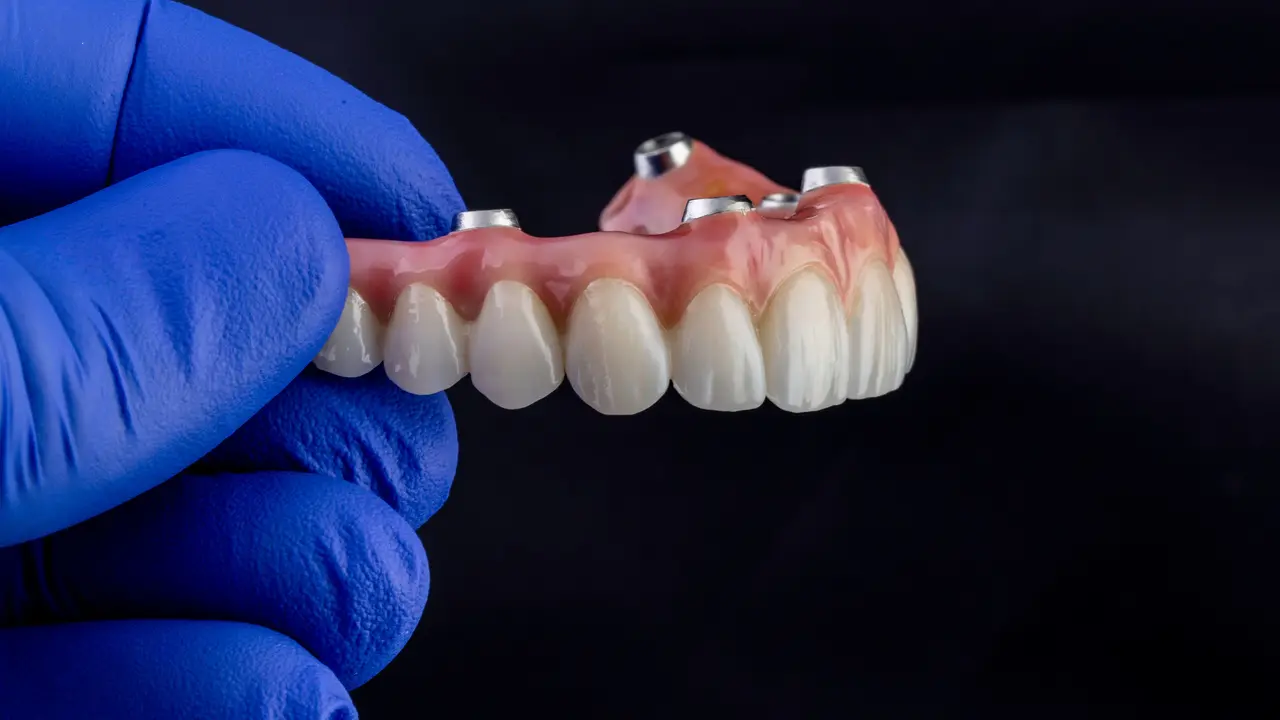
If your denture slips when you eat, shifts when you speak, or simply never feels secure, you are not alone. Merrifield Oral Surgery offers implant-supported overdentures as a stable, surgeon-placed solution that attaches directly to dental implants so your denture stays exactly where it belongs. Our board-certified oral surgeons plan every case with 3D CBCT imaging, and we accept many insurance plans to help make treatment accessible. If you are weighing your options in Falls Church, VA, we are glad to walk you through what to expect.
Call (703) 639-0027Why Implant-Supported Overdentures Outperform Traditional Dentures
A traditional denture sits on top of your gum tissue and relies on suction or adhesive to stay in place. That approach has real limits. An overdenture on implants in Falls Church connects to small titanium posts placed in your jawbone, giving the denture a fixed anchor point it can snap onto and release from as needed.
The practical differences matter every day:
- Stays put while you eat, laugh, and talk
- No denture adhesive needed
- Reduces bone loss that accelerates when teeth and roots are missing
- Easier to clean than a fixed bridge
- More affordable than a fully fixed full-arch restoration
- Preserves more of the jaw structure you still have
Because the implants integrate with the bone itself, the denture does not put pressure on soft tissue the way a traditional prosthesis does. Most patients notice the difference right away.
Who Is a Candidate for an Implant Overdenture?
Good candidates are adults who are missing most or all of their teeth on one or both arches and want a more stable option than a standard removable denture. You will generally need enough healthy bone in your jaw to hold implants securely. If bone volume is lower than ideal, a bone grafting procedure can often build it back up before implants are placed. Some patients also benefit from pre-prosthetic surgery to prepare the jaw or gum tissue before the prosthesis is fitted. Your surgeon will review your specific anatomy during your first visit.
What Happens If You Keep Delaying Tooth Replacement?
Waiting is understandable. But the jawbone beneath a missing tooth begins to shrink over time because it no longer receives the stimulation that tooth roots once provided. The longer that process continues, the less bone is available to support implants later. A denture that fits reasonably well today may fit poorly in a year or two as the ridge underneath it changes shape. At some point, the bone loss can become severe enough that implant placement is no longer straightforward, or additional preparatory procedures become necessary. Acting sooner generally means a simpler path to a stable, long-term result.
What to Expect During Your Overdenture Treatment
Every patient's timeline looks a little different, but the process follows a clear sequence. Here is how it typically unfolds at our Falls Church office.
Your Consultation and 3D Imaging
Your first appointment covers a thorough review of your dental and medical history, an exam of your jaw and existing gum tissue, and a 3D CBCT scan. That scan gives your surgeon a detailed picture of your bone volume, nerve positions, and jaw anatomy before any planning decisions are made. It is the same technology we use for our dental implants, and it lets us map out implant positions with precision before a single incision is made.
Implant Placement and Healing
On the day of surgery, your surgeon places the implants into the jawbone at the planned positions. IV sedation is available, so most patients feel very little during the procedure and remember even less afterward. After placement, the implants need time to fuse with the surrounding bone, a process called osseointegration. Healing timelines vary based on individual factors your surgeon will review with you. During this period, you may wear a temporary prosthesis so you are never without teeth.
Attaching and Adjusting Your Overdenture
Once your implants have integrated, your overdenture is connected using small attachment components, often ball or locator attachments, that allow the prosthesis to snap securely onto the implants and be removed for cleaning. Your surgeon and restorative dentist will work together to make sure the fit and bite feel right. Minor adjustments are normal in the early weeks and are a standard part of the process.
Overdenture vs. Full Arch Reconstruction: Which Is Right for You?
Both options address significant tooth loss and both use dental implants as their foundation. The right choice depends on your bone volume, your budget, and how important removability is to you. Here is a side-by-side look at the key differences between an implant-supported overdenture and a full arch reconstruction.
| Feature | Implant-Supported Overdenture | Full Arch / All-on-4 |
|---|---|---|
| Implants required | Typically 2-4 | Typically 4-6 |
| Removability | Removable by patient | Fixed; removed by dentist only |
| Cost tier | Lower | Higher |
| Bone volume needed | Moderate; grafting often an option | Moderate to high; angled implants can compensate |
| Treatment timeline | Moderate | Moderate to extended |
| Cleaning | Removed daily for cleaning | Brushed in place like natural teeth |
If you want a fixed restoration that never comes out, a full arch reconstruction may be the better fit. If removability, lower implant count, and cost are priorities, an implant overdenture is worth a close look. Your surgeon can help you sort through the tradeoffs at your consultation.
Questions
Frequently Asked Questions About Implant Overdentures
How many implants are needed to support an overdenture?
Most lower overdentures attach to two to four implants, while upper overdentures often require four or more to achieve reliable stability. Your surgeon will review your bone volume and jaw anatomy during your consultation to recommend the right number for your situation.
Is the procedure covered by dental insurance?
Many dental insurance plans cover a portion of implant-related treatment, though the specifics vary by plan. Our team works with a range of insurance carriers and can help you understand your benefits before treatment begins. Visit our Insurance and Financing page for more details.
How long do implant-supported overdentures last?
The implants themselves are designed to last many years with proper care. The overdenture prosthesis will typically need periodic adjustments and may eventually be replaced over time, as the fit can change with normal wear and minor shifts in the jaw.
Will I be awake during implant placement?
You do not have to be awake and anxious during the procedure. We offer IV sedation so most patients feel little to nothing during implant placement and have minimal memory of the appointment. Your surgeon will discuss sedation options with you beforehand.
Can I eat normally with an implant overdenture?
Yes. One of the biggest advantages of an implant-retained overdenture is that it stays firmly in place while you chew. Most patients are able to eat a much wider range of foods than they could with a traditional removable denture, which often shifts or requires adhesive.

Ready to Stop Living Around a Loose Denture?
Our board-certified surgeons are ready to help you find out whether an implant overdenture is the right move, and to guide you through every step if it is.