Services
Bone Grafting in Falls Church, VA: Rebuild Your Foundation
If your dentist has referred you for bone grafting, you are already on the right path. Merrifield Oral Surgery is a board-certified oral and maxillofacial surgery practice serving Falls Church and the surrounding Northern Virginia communities. New patients are always welcome, and our surgical team is here to walk you through every step of the process, from your first question to a confident recovery.
Call (703) 639-0027What Is Bone Grafting and Who Needs It?
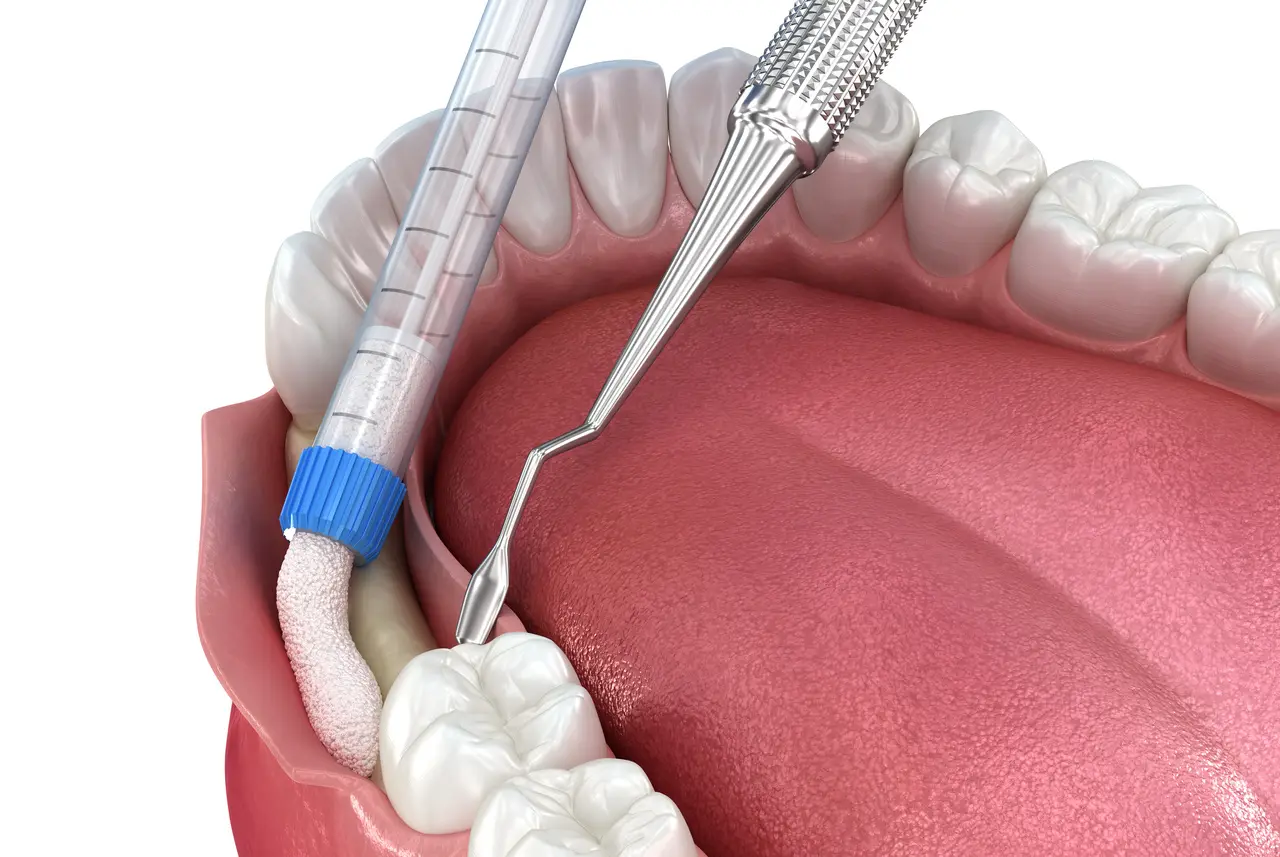
A bone graft restores lost or damaged bone in your jaw. Think of it as rebuilding the foundation your teeth rely on. When that foundation is thin or missing, it cannot support a dental implant or hold the surrounding structures in place.
You may need a bone graft if a tooth was removed and the socket was not preserved right away, if gum disease has worn away the bone over time, or if an injury has caused bone loss. General dentists often refer patients for this procedure before implant placement.
Common Reasons Jawbone Loss Occurs
- Tooth extraction without socket preservation
- Periodontal (gum) disease
- Infection or abscess
- Facial trauma or injury
- Long-term denture wear
- Congenital conditions affecting jaw development
Why Bone Grafting Matters for Your Long-Term Oral Health
A strong jawbone does more than hold teeth in place. It supports the shape of your face, keeps neighboring teeth from shifting, and makes future tooth replacement possible. Bone grafting at our practice is designed to give you that foundation back so your treatment options stay open.
What Happens If Bone Loss Goes Untreated
Bone loss in the jaw tends to progress on its own. Without intervention, the ridge can shrink to the point where implants are no longer possible. Neighboring teeth may drift or loosen. Over time, the face can take on a sunken appearance as the underlying structure changes. Addressing bone loss early keeps more options on the table and makes any future procedure more straightforward.
Bone Grafting Procedures We Perform in Falls Church
Our board-certified surgeons perform a range of grafting procedures, each matched to where the bone loss has occurred and what your treatment plan requires.
Socket Preservation
When a tooth is extracted, the empty socket naturally begins to shrink. Socket preservation places graft material into the socket immediately after removal to hold its shape and volume. This step makes implant placement far more predictable later on.
Ridge Augmentation
If significant bone loss has already occurred, ridge augmentation rebuilds the height and width of the jaw ridge. This is often needed when implants were not placed shortly after an extraction or when bone loss has accumulated over time.
Sinus Lift
The upper back jaw sits close to the sinus cavity. When bone in that area is too thin to support an implant, a sinus lift gently raises the sinus floor and places graft material beneath it to create enough depth for a stable implant.
Nerve Repositioning
In the lower jaw, the inferior alveolar nerve can sit too close to where an implant needs to go. Nerve repositioning carefully moves the nerve to create safe, adequate space. This is a more advanced procedure and is performed selectively when other options are not suitable.
Advanced Technology for Precise Bone Grafting
Careful planning makes a real difference in surgical outcomes. Before your procedure, we use imaging and preparation techniques that give your surgeon a clear picture of exactly what needs to be done.
3D/CBCT Imaging and Guided Planning
Our 3D cone beam CT (CBCT) scanner produces a detailed, three-dimensional image of your jaw, bone density, nerve pathways, and sinus anatomy. This lets your surgeon map the graft site with precision before a single incision is made, reducing guesswork and supporting more predictable results.
Platelet Rich Plasma (PRP) Techniques
PRP is derived from a small sample of your own blood. The concentrated growth factors are applied at the graft site to help support the healing process. This technique is used when it may benefit your specific case.
Questions
Frequently Asked Questions About Bone Grafting
How long does bone grafting recovery take?
Most patients feel comfortable returning to normal daily activities within a few days. The graft itself takes several months to fully integrate with your existing bone before implant placement can begin. Your surgeon will give you a timeline based on your specific procedure.
Is bone grafting painful?
Discomfort after a bone graft is typically mild to moderate and managed well with prescribed medication. Most patients are surprised by how manageable the recovery feels. Sedation options are available to keep you comfortable during the procedure itself.
Will my insurance cover bone grafting?
Coverage varies by plan. Many dental and medical insurance policies cover bone grafting when it is deemed medically necessary. Visit our Insurance & Financing page to learn more, and our team can help you review your benefits before your procedure.
How soon after grafting can I get dental implants?
The timing depends on the type and extent of the graft. In many cases, implant placement can begin once the graft has fully matured, which often takes several months. For patients replacing multiple teeth, ask us about Full Arch reconstruction options as well. Your surgeon will monitor healing and let you know when you are ready for the next step.

Ready to Restore Your Jawbone and Move Forward with Treatment?
A bone graft is often the step that makes everything else possible. Our board-certified surgical team is here to answer your questions and help you feel confident about what comes next.